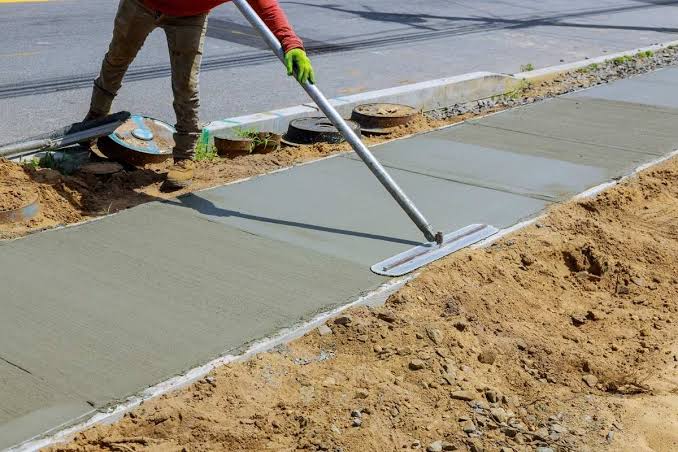
settled sidewalk vs replacement Cedar Rapids: When to Level, When to Replace
⏱️ 8 min read · Last updated: 2026
- Typical cost gap: sidewalk leveling commonly runs about 40%–70% less than slab replacement, depending on access, slab size, and finish work.
- Crack width limit: leveling is usually still reasonable when cracks are hairline to about 1/4 inch wide and the slab has not shifted into separate moving pieces.
- Slab thickness minimum inches: 4 inches is the common minimum for a sidewalk slab that is worth lifting instead of replacing.
- Replacement wins when the concrete has widespread spalling, multiple broken corners, or settlement that has already fractured the slab into unstable sections.
- Polyurethane foam cures fast; in many cases, the sidewalk can be walked on within minutes, while slab replacement usually means forms, cure time, and a longer closure.
A cracked, sunken walk does not automatically mean slab replacement. In settled sidewalk vs replacement Cedar Rapids decisions, the first thing I look for is whether the slab is still one solid piece, or whether it has already turned into a patchwork of loose corners and crumbling edges.
I have seen leveling save a homeowner from a full tear-out on a four-panel run that was only 1 to 1.5 inches low. I have also seen a “cheap fix” fail because the concrete had deep spalling, a widened crack, and a thin edge that could not hold the lift. That is the real trade-off: level the right slab, replace the wrong one.
For Cedar Rapids homes, freeze-thaw cycles make this decision less forgiving. A slab that looks “just a little off” in April can open up by November, especially where water sits along the joint. The good news is that the right call is usually obvious once you know the thickness, crack width, and surface damage that still leave leveling on the table.
The real difference between leveling and slab replacement
Leveling fixes height first; slab replacement fixes structure first. If the sidewalk slab is still mostly intact, leveling with polyurethane foam is the faster, cheaper answer. If the slab is broken, thin, or badly spalled, slab replacement is the cleaner long-term fix.
The part people miss is that settlement and damage are not the same problem. A slab can sink because soil under it washed out, but still be strong enough to lift. Another slab can sit almost level and still need replacement because the top has flaked apart, the corners have failed, or the concrete has lost enough mass that the lift will not last.
A sidewalk slab that is at least 4 inches thick, with cracks under about 1/4 inch and limited spalling, is often a leveling candidate; beyond that, slab replacement becomes more honest than hope.
If you are comparing sidewalk repair options, start with the slab itself, not the symptom. In Cedar Rapids, the most practical triage is simple: measure the crack width, check whether the edges rock under foot, and look at the underside of any broken corner. If the concrete behaves like one piece, leveling is usually still in play. If it behaves like several pieces, replacement is usually the safer choice.
For a broader look at where each surface tends to land, the service map on concrete leveling by surface type Cedar Rapids is useful because sidewalks, driveways, and patios do not fail the same way. That matters when you are trying to compare repair cost against replacement cost.
One more practical detail: the word “repair” gets used loosely. In concrete work, repair can mean filling, sealing, lifting, or rebuilding. Those are not interchangeable. The right answer for a settled sidewalk is often lift and seal, not patch and pray.
Should I level or replace my cracked and settled sidewalk in Cedar Rapids?
Choose leveling if the sidewalk slab is still structurally sound, only a section has settled, and the cracking is narrow and stable. Choose replacement if the slab has multiple fractures, edge breakdown, or serious spalling concrete that keeps expanding after every freeze-thaw season.
The easiest cutoff I use is this: if the slab is intact enough that you can imagine lifting it as one piece, leveling deserves a look. If the slab already looks like a puzzle, slab replacement wins. That sounds blunt, but it saves money and future frustration.
When leveling still earns its keep
Leveling works best on one-piece sidewalk slabs that have dropped because of soil voids, erosion, or poor compaction. It is especially useful when the height difference is noticeable but the surface still has enough structure to carry itself after the lift. That is where polyurethane foam shines: it fills voids, supports the slab, and returns the walkway to grade fast.
Leveling also helps when the problem is nuisance more than destruction. A 1-inch trip edge near a front walk, a slight tilt at a driveway-to-sidewalk transition, or a single settled panel by the porch can usually be corrected without the mess of demolition. For many homeowners, that is the difference between one morning of disruption and a multi-day project.
If you want a cost frame, the page on concrete leveling cost is a better starting point than guessing from generic national averages. In most cases, leveling lands far below replacement because you avoid tear-out, hauling, forming, and a full pour.
When leveling stops making sense
Leveling stops making sense when the sidewalk slab has lost too much integrity. That includes wide, through-cracks that move under load, corners that break off by hand, and deep spalling that leaves the surface pitted and weak. Once the concrete is failing as a material, raising it only restores height, not strength.
This is where the slab replacement threshold becomes practical rather than theoretical. If a 4-inch sidewalk slab has turned thin at the edge because of repeated spalling, or if the crack network suggests the slab has already separated internally, replacement is usually the smarter buy. The fix needs to address the concrete itself, not just the empty space below it.
For oddball jobs like a slab under outdoor equipment, the same logic applies. A crooked pad can sometimes be saved, but an overloaded or cracked support pad often cannot. The case studies on AC unit slab leveling Cedar Rapids show why a small slab with the wrong failure pattern needs a different plan than a normal walkway.
At what point is a sidewalk too damaged to level?
A sidewalk is too damaged to level when the concrete no longer behaves like a single slab. The common cutoff is severe spalling, major breakage, or cracking wider than roughly 1/4 inch when the crack also shows movement or vertical separation.
That crack width limit is not a magic law, but it is a useful field test. Hairline cracks often stay compatible with leveling. Cracks approaching 1/4 inch need a closer inspection. Once a crack becomes wide enough to catch a fingertip and the edges are moving, the slab is telling you it has lost more than height.
| Criteria | Leveling | Slab replacement | Winner for this condition |
|---|---|---|---|
| Typical cost | Usually 40%–70% less than replacement | Higher due to tear-out, haul-away, and new concrete | Leveling for intact slabs |
| Crack width | Works best under about 1/4 inch | Best when cracks are wide, moving, or offset | Replacement for moving cracks |
| Slab thickness | Best when at least 4 inches thick | Best when slab is too thin or edge-damaged | Replacement for thin slabs |
| Spalling concrete | Only minor surface loss | Severe surface loss and crumbling edges | Replacement for heavy spalling |
| Downtime | Often same-day use | Often several days of cure and closure | Leveling for fast access |
| Best use case | One solid slab that has settled | A slab that is structurally failing | Depends on slab condition |
| Long-term value | Strong when the slab is otherwise healthy | Best when the old slab would keep deteriorating | Replacement for badly worn slabs |
Why won’t my contractor level a badly cracked sidewalk?
Because lifting a broken sidewalk slab can make the damage worse instead of better. Contractors usually avoid leveling when the concrete is already fragmented, the crack is moving, or the edge is too weak to hold the lift. In that case, slab replacement is the safer recommendation.
The honest side-by-side
Leveling wins on speed, cost, and disruption. Slab replacement wins on permanence when the concrete itself is done. If you only remember one thing, remember this: leveling fixes elevation, replacement fixes deterioration.
The leveling side is strongest when a homeowner needs a practical fix before the next season turns the trip edge into a bigger liability. I have seen polyurethane foam lift a sidewalk panel, stabilize the void beneath it, and leave the walkway usable in the same afternoon. That is hard to beat for a front entry, mailbox run, or main pedestrian path.
The replacement side is stronger when the slab has crossed the point where patching and lifting only delay the inevitable. Severe spalling, wide separations, and badly broken corners usually mean you are paying twice if you try to save the old slab. That is especially true if the slab is thin or the surrounding grade keeps draining water toward the same spot.
One useful way to think about it is life cycle cost. Leveling can be the cheaper first move, but only when the slab has enough life left to justify it. Replacement costs more today, yet it can be the lower-friction choice over the next 10 years if the existing concrete is already failing.
In practice, settled sidewalk vs replacement Cedar Rapids is less about price alone and more about whether the slab is still a single, stable piece.
Best fit for leveling
Choose leveling if the sidewalk is uneven, but the slab is sound. That usually means moderate settlement, narrow cracking, and no widespread crumble. If the slab is 4 inches thick or more, leveling usually has enough material to work with.
Best fit for replacement
Choose replacement if the slab is broken, thin, or visibly decayed. Replacement is also the better call if you want a fresh finish that matches adjacent concrete, or if the old slab has already been repaired multiple times and keeps failing in the same spot.
If you are comparing numbers, the concrete leveling cost by surface Cedar Rapids page helps frame why sidewalks often land in a different budget band than garage floors or patios. Surface size, access, and finish detail all change the equation.
When to reconsider this choice entirely
Reconsider both options when the settlement is caused by a bigger drainage or soil problem. If water keeps washing out the base, the best repair can fail again unless the underlying cause gets fixed first.
This is where a lot of homeowners waste money. They debate leveling versus replacement, but the real problem is runoff from a downspout, a negative grade, or a void that keeps re-forming under the walk. Fix the water path first, or the new work inherits the old problem.
There are also a few exception scenarios where the overall verdict flips. First, if the sidewalk slab is only slightly settled but the surrounding concrete is older and brittle, replacement may be the smarter long-term move. Second, if you need the walkway back fast and the slab is still intact, leveling wins even if replacement might look cleaner. Third, if the slab is part of a larger trip hazard near an entry, matching the whole run with replacement may be worth the extra cost.
I made the wrong call once on a small front walk by underestimating surface breakdown. The slab lifted fine, but the top layer kept shedding after the first winter because the spalling was worse than it looked in dry weather. Since then, I treat visible surface loss as a red flag, not a cosmetic issue.
Our verdict: which one to choose and why
Choose leveling if the sidewalk slab is intact, at least 4 inches thick, and only moderately settled. Choose slab replacement if the slab has wide moving cracks, major spalling, or edge breakdown that makes the concrete structurally weak. Neither if drainage, root pressure, or repeated washout will keep recreating the same defect.
That is the cleanest answer for settled sidewalk vs replacement Cedar Rapids in 2026. Leveling is the right call for a good slab that simply dropped. Replacement is the right call for a bad slab that has started to die. Do not pay replacement prices for a salvageable slab, and do not try to save a failing slab just because lifting sounds easier.
If you want a fast next step, photograph the worst crack, measure the width, and check the slab thickness at an exposed edge or nearby joint. If you can confirm a solid 4-inch slab with limited damage, ask for leveling first. If the slab looks fragile, go straight to replacement estimates.
Common Questions About settled sidewalk vs replacement Cedar Rapids
When should a sidewalk be replaced instead of leveled?
Replace a sidewalk when the slab has major spalling, multiple broken pieces, or cracks that move under foot. If the concrete is thinner than about 4 inches, or the edges crumble when pressed, leveling usually will not last. Replacement gives you a fresh structural base.
How do you decide to level or replace a sidewalk step by step?
Start with thickness, then cracking, then surface loss. If the sidewalk slab is about 4 inches thick, has cracks under 1/4 inch, and only settled, leveling is usually the better move. If the slab is broken, spalled, or unstable, slab replacement is the safer choice.
Leveling vs replacement for sidewalks — which is cheaper long term?
Leveling is usually cheaper upfront, often by 40%–70%, but replacement can be cheaper long term if the old slab keeps breaking down. If the concrete is still sound, leveling wins. If the slab is already failing, replacement prevents repeated repair bills.
How much does sidewalk replacement cost vs leveling in Cedar Rapids?
Leveling usually costs much less because it avoids demolition and new concrete work. Replacement costs more due to tear-out, hauling, forming, and curing time. Exact pricing in Cedar Rapids depends on slab size, access, and finish work, so getting both quotes on the same visit is smart.
Why does spalling concrete change the repair decision so much?
Spalling concrete means the surface is breaking down, not just sinking. If the damage is minor, leveling can still work. If the spalling is deep or widespread, the slab has lost the strength needed to hold a lift, and replacement becomes the more durable fix.
Can a settled sidewalk be lifted if the crack is a little wider than 1/4 inch?
Sometimes, but only if the slab is still stable and the crack is not actively moving. Once the crack gets wider, offset, or paired with spalling, the risk climbs fast. A small amount over 1/4 inch is a warning sign that replacement may be the better investment.
- Leveling is best for one-piece sidewalk slabs that settled but did not break apart.
- A 4-inch slab thickness and cracks under about 1/4 inch are the main practical green lights for leveling.
- Severe spalling, thin edges, or moving cracks push the decision toward slab replacement.
- In Cedar Rapids, the smartest choice is the one that solves the water or soil issue underneath the slab, not just the visible trip edge.
The bottom line
For settled sidewalk vs replacement Cedar Rapids, my call is simple: level the slab if it is thick, stable, and only sunk; replace it if it is cracked, spalling, or structurally weak. The best choice is the one that matches the concrete’s condition, not the cheapest quote. Pick one thing from this article and try it this week: measure your worst crack and check whether the slab still acts like one piece. Then compare it against the broader Surface-by-Surface Concrete Leveling in Eastern Iowa: Driveways, Garages, Patios, Sidewalks & Pool Decks pillar before you decide.
See also: concrete leveling by surface type Cedar Rapids
See also: sunken garage floor leveling Cedar Rapids
See also: concrete leveling cost by surface Cedar Rapids
Related: driveway apron lifting
Related: patio slab leveling
Related: sidewalk leveling Cedar Rapids