
sidewalk leveling Cedar Rapids: What to Fix First in 2026
⏱️ 8 min read · Last updated: 2026
- A sidewalk lip of 1/2 inch or more is commonly treated as a trip hazard in accessibility guidance, including ADA-style trip hazard repair thresholds.
- Typical sidewalk leveling cost is often about $300 to $900 per slab for polyurethane foam, with larger or harder-access jobs running higher.
- Most sidewalk slab jacking jobs take about 30 minutes to 2 hours per slab, and many walkways can be used the same day.
- Cedar Rapids residents should verify public sidewalk responsibility before paying for repair, because some sidewalks are city-controlled while others are tied to adjacent property owners.
- Iowa DOT sidewalk standards matter when a repair must align with public-way rules, drainage, and accessible route expectations.
The crack ran from the garage apron to the mailbox, and the front walk had a clean 3/4-inch lip by April. That is the kind of problem that turns sidewalk leveling Cedar Rapids from a nice-to-have into a safety fix fast. I have seen homeowners wait through one freeze-thaw cycle and spend more because the slab kept rocking and pumping mud back out.
The hard part is not the repair itself. It is deciding whether you should touch the slab, call the city, or leave it alone because the surface is worn but still stable. In 2026, the best outcomes usually come from measuring first, then choosing the least invasive option that actually removes the trip hazard.
What actually determines the right answer here
If the sidewalk is merely uneven, leveling usually beats replacement. If the slab is broken in several pieces, badly heaved by roots, or missing enough concrete that the edge crumbles, replacement starts to make more sense.
Three things usually decide the fix: how high the lip is, whether the slab is still intact, and whether water keeps pushing the same section out of place. Polyurethane foam works well when the slab needs support, not demolition. I have watched a two-person crew lift a settled walk in about an hour when the concrete itself was still in good shape.
| Situation | Best Path | Why Other Options Fail |
|---|---|---|
| 1/4-inch to 1/2-inch differential, slab is intact | Sidewalk slab jacking or polyurethane foam | Replacement is usually more expensive and slow for a sound slab |
| 1/2-inch+ lip with rocking slab | Level first, then seal joints | Grinding alone does not fix the void under the slab |
| Cracked into multiple loose pieces | Replace the section | Foam cannot restore missing structure |
| Repeated settling from poor drainage | Fix drainage, then lift | Leveling without water control often fails again |
A sidewalk slab is easiest to save when the concrete is sound but the soil below it has moved; once the concrete itself is crushed or split through, the repair decision changes.
For context, Cedar Rapids weather makes soil movement a real issue. Freeze-thaw cycles can open voids, then spring runoff can wash finer soil away. That is why the best sidewalk leveling Cedar Rapids jobs usually start with the subgrade, not the top surface.
For a broader look at methods, costs, and before-and-after outcomes, the local overview on concrete leveling cedar rapids is useful when you are deciding whether lifting is enough.
Quick check: If the slab is intact and the lip is under about 1 inch, leveling is usually the first thing to price out. If the slab is shattered or the walkway keeps moving after every thaw, replacement may be smarter.
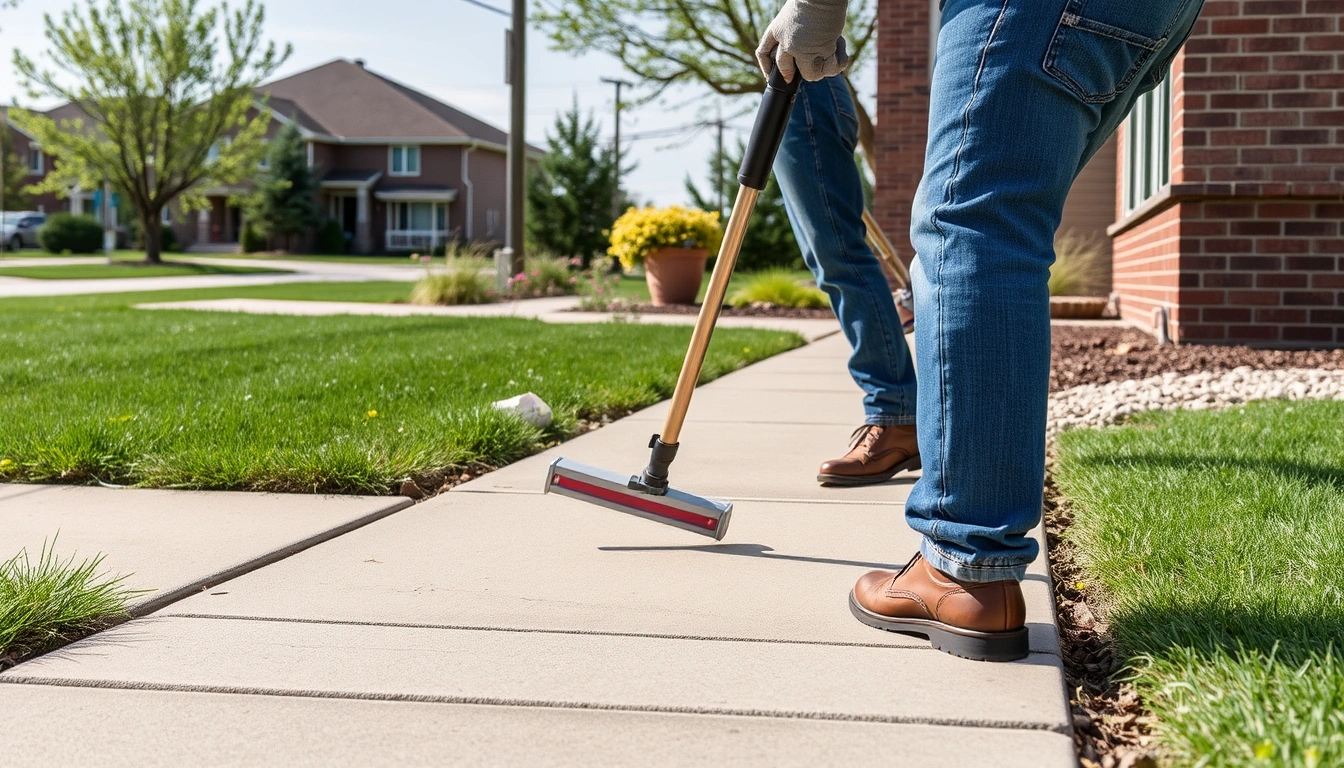
Who is responsible for fixing an uneven sidewalk in Cedar Rapids?
In Cedar Rapids, the answer is often not the same for every sidewalk. Some segments are treated as public-right-of-way issues, while others are tied to adjacent property owners, so you should verify responsibility before you pay for repair.
That is the local detail most articles skip, and it matters. If the uneven slab sits on a public sidewalk strip, Cedar Rapids may have notice, inspection, or cure steps tied to city rules. If the walk is on private property, the owner usually has the responsibility and the timing is simpler.
Use this workflow before you call anyone
- Find the exact slab location and note the nearest address.
- Measure the lip at the worst point with a tape measure or straightedge.
- Check whether the sidewalk borders your lot, sits in a public strip, or connects to a city-maintained route.
- Review local property and public-way guidance, plus Iowa DOT sidewalk standards if the route serves accessibility or public travel.
- Call the city if the sidewalk appears to be in the public right-of-way, and ask whether there is a notice or cure deadline.
- Get a repair estimate only after you know who can authorize the work.
Typical city notice and cure timeframes are often measured in days, not weeks, and local guidance commonly gives owners a short window to correct a hazard after notice. In practice, that means a 7- to 30-day window is a common municipal pattern, but you should confirm the exact Cedar Rapids timeframe before assuming anything.
When homeowners own the responsibility, the path is straightforward: measure, document, price, fix. When the city owns or shares the responsibility, you want to document the hazard with photos and a tape measure before anything else.
For cost planning, the local concrete leveling cost page is a better starting point than guessing from national averages, because access, slab size, and joint conditions change the price fast.
Quick check: If you are unsure who owns the slab, do not schedule work yet. Confirm responsibility first, then get an estimate that matches the actual owner and location.
How much of a lip on a sidewalk counts as a trip hazard?
As a practical rule, a lip of about 1/2 inch or more is commonly treated as a trip hazard. Smaller differences can still matter near curb cuts, driveways, and heavily used walkways, but 1/2 inch is the number most people use as the point where trip hazard repair becomes urgent.
That number matters because the eye misses it, especially in low light or after snowmelt leaves a dark, wet surface. I have seen one-quarter-inch offsets go unnoticed for months, then become a real stumble point once the slab settled another quarter inch after a thaw.
A 1/2-inch lip is the threshold that changes the conversation from “watch it” to “fix it,” especially on paths used by kids, older adults, or delivery traffic.
Not every raised sidewalk slab needs the same solution. If the slab is level enough and just needs the edge taken down for a smooth transition, grinding can sometimes help. But if the slab is sitting high because the adjacent panel sank, grinding alone leaves the underlying problem untouched.
For public routes, the relevant benchmark is often accessibility-friendly slope and transition guidance, including Iowa DOT sidewalk standards and related ADA expectations for routes used by pedestrians. The exact compliance target depends on the route, but the lift threshold is still the first screening tool.
If you want before-and-after examples of what the repair actually looks like, the local gallery at concrete leveling before and after cedar rapids shows the difference between a corrected lip and a section that really needed replacement.
Quick check: If you can catch the edge with your shoe and measure about 1/2 inch or more, treat it as a trip hazard now, not later.
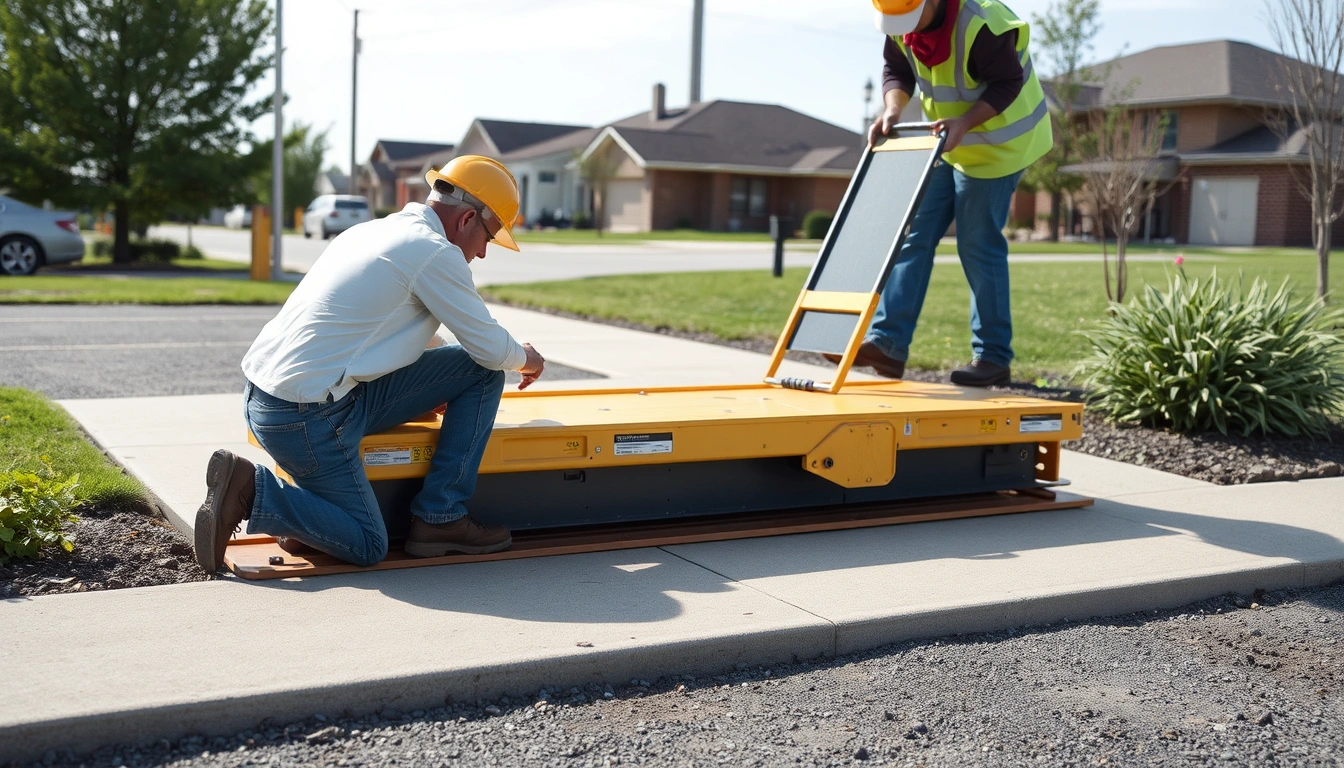
When sidewalk slab jacking wins, and when it doesn’t
Sidewalk slab jacking wins when the concrete is sound, the settling is localized, and you want a fast fix with little cleanup. It loses when the slab is cracked through, the base is badly washed out, or tree roots are still pushing the panel upward.
Polyurethane foam has become the cleaner option for many sidewalk jobs because it expands, fills voids, and usually leaves a smaller footprint than heavier mudjacking mixes. That said, mudjacking can still make sense on larger slabs or when the crew needs a lower-cost lift and access is easy.
Choose the method by the failure, not the brochure
- Inspect the slab for through-cracks, missing corners, or rocking movement.
- Look for drainage issues, downspout discharge, or voids at the joint line.
- Choose polyurethane foam if you need precision, lighter injection, and fast return to use.
- Choose mudjacking if the slab is large, the budget is tight, and the slab is still structurally stable.
- Replace the section if the concrete is broken, pulverized, or too thin to hold a clean lift.
Typical sidewalk leveling cost per slab lands in a broad range, but most homeowners see fewer surprises with foam on smaller walkways because the job is faster and cleaner. The useful question is not “what is cheapest?” It is “which method will still be working after the next freeze-thaw cycle?”
The answer is usually foam when the slab needs a precise lift and the access is awkward, which is common along narrow Cedar Rapids walks. For a more data-heavy look at the tradeoffs, the local page on concrete leveling statistics gives a useful Iowa-specific context for decision-making.
Quick check: If the slab is intact and the fix needs to happen in hours, not days, sidewalk slab jacking is usually the better path than replacement.
The fastest workflow for a raised sidewalk slab
The fastest workflow is: measure, document, confirm responsibility, choose the repair method, then seal the joint after leveling. If you skip the first two steps, you risk paying for the wrong party’s problem or approving the wrong repair.
Here is the practical order I would use on a real Cedar Rapids property in 2026. It is simple, but it prevents most bad decisions.
- Measure the lip. Use a tape measure and a straightedge, and write down the highest point.
- Photograph the problem. Take one close shot and one wide shot for context.
- Check ownership. Confirm whether this is a public sidewalk responsibility issue or a private repair.
- Inspect for root or water causes. Look at gutters, downspouts, downspout extensions, and nearby grading.
- Choose the repair. If the slab is sound, ask for polyurethane foam or sidewalk slab jacking pricing.
- Ask about cure time. Most foam lifts are walkable the same day, but confirm with the contractor.
- Seal joints and manage water. Keep water from returning to the same void.
That last step matters more than most homeowners expect. The repair often fails not because the lift was bad, but because the same water path reopened the void under the slab. I have seen a $700 lift hold for years when drainage was fixed, and the same style of lift fail in one winter when it was not.
One honest mistake I made early on was assuming the visible crack was the problem. It was not. The void under the slab was the real issue, and once I started looking for runoff paths first, the repairs lasted longer and cost less.
If you are comparing concrete repair approaches, the broader service page on concrete leveling cedar helps you match the method to the surface instead of guessing from price alone.
Quick check: If the slab is raised but not shattered, and water is clearly part of the story, the right workflow is lift first, then fix drainage, then seal.
Edge cases that change the answer
The normal advice breaks down in a few specific situations. If any of these apply, you should change the plan before you price the work.
1. The slab is next to a tree root flare
If roots are actively lifting the panel, leveling alone may only buy time. The better move is to assess whether root trimming, a root barrier, or replacement with a root-friendly design makes more sense.
2. The walkway is part of a drainage path
If water runs across the sidewalk every storm, lifting without grading changes usually fails. Fix the water path first, or the void will come back.
3. The slab is thin or already flaking
If the concrete surface is spalled, edge-damaged, or too thin at the joint, the slab may not tolerate injection cleanly. Replacement is safer than forcing a lift.
4. The sidewalk is in a public route with strict accessibility expectations
If the path serves a public building, school route, or another route tied to Iowa DOT sidewalk standards, the slope and transitions matter more than a simple cosmetic fix. In that case, confirm the standard before any repair starts.
5. The slab keeps rising after wet weather
If the panel is heaving upward, not settling, the issue is often frost or swelling soil, not just a void. Foam may still help later, but the active movement needs to be addressed first.
Why is my sidewalk lifting instead of sinking?
A sidewalk slab lifts when roots, frost, or swelling soil push it upward instead of allowing settlement. In Cedar Rapids, freeze-thaw cycles can make that worse. If the slab is rising, check for nearby trees, poor drainage, and saturated soil before choosing sidewalk slab jacking.
How much does sidewalk leveling cost in Cedar Rapids?
Most sidewalk leveling cost estimates land around $300 to $900 per slab for polyurethane foam, though difficult access, multiple slabs, or drainage fixes can raise the price. Replacement usually costs more because labor, tear-out, and disposal add up fast.
For a repair that needs a quick visual reality check, the local comparison page with concrete leveling before and after cedar rapids is useful because it shows when leveling is enough and when the slab was too far gone.
Quick check: If the sidewalk is moving because of roots, water, or frost, do not treat it like a simple slab issue. Fix the cause or the repair will not hold.
- For sidewalk leveling Cedar Rapids, measure the lip first and treat 1/2 inch or more as a trip hazard.
- Confirm public sidewalk responsibility before you pay for repairs on a city-side section.
- Polyurethane foam is usually the best fit for sound slabs with a settled base.
- Drainage fixes matter as much as the lift if you want the repair to last through 2026 weather.
Common Questions About sidewalk leveling Cedar Rapids
What height difference on a sidewalk is a trip hazard?
A height difference of about 1/2 inch or more is commonly treated as a trip hazard. Smaller offsets can still matter if the sidewalk is heavily used, poorly lit, or part of a public route. Measure the worst spot with a straightedge and tape measure before deciding.
How is an uneven sidewalk leveled step by step?
The basic sequence is measure the lip, confirm ownership, inspect for drainage or root issues, inject polyurethane foam or use another lifting method, and then seal the joints. Most sidewalk slab jacking jobs take 30 minutes to 2 hours per slab, depending on access.
Sidewalk grinding vs leveling — which is better?
Grinding is better only when the slab is otherwise stable and you need to smooth a small edge transition. Leveling is better when the slab has settled, because grinding does not fill the void below the concrete. If the slab rocks, grinding is the wrong fix.
Who is responsible for fixing an uneven sidewalk in Cedar Rapids?
Responsibility depends on whether the slab is in the public right-of-way or tied to private property. In Cedar Rapids, some sidewalk sections fall under city rules and others under adjacent property owners, so the first step is to confirm location before hiring a contractor or making a report.
How long does sidewalk leveling take in Cedar Rapids?
Most sidewalk leveling jobs take about 30 minutes to 2 hours per slab, and many can be walked on the same day. The exact timing depends on slab size, access, how many voids need filling, and whether the crew also needs to correct drainage near the walkway.
Should I replace or level a raised sidewalk slab?
Level it if the concrete is intact and the problem is mainly settlement or a void under the slab. Replace it if the panel is broken, badly spalled, or too damaged to hold a clean lift. A quick inspection of cracks and edges usually makes the call clear.
The bottom line
For sidewalk leveling Cedar Rapids, start with ownership, then measure the lip, then choose the least invasive fix that removes the trip hazard. If the slab is sound, polyurethane foam or sidewalk slab jacking is usually the right first move in 2026. If the slab is broken or the water problem is still active, repair the cause or replace the section instead.
Pick one thing from this article and try it this week, not all of it. Measure the worst lip on your sidewalk, take two photos, and check whether the slab is public or private before you ask for bids. For the bigger surface-by-surface context, see Surface-by-Surface Concrete Leveling in Eastern Iowa: Driveways, Garages, Patios, Sidewalks & Pool Decks.
- Measure first: 1/2 inch or more is the practical trip hazard line.
- Confirm public sidewalk responsibility before paying for a city-side repair.
- Polyurethane foam is usually the fastest fix for a sound, settled sidewalk slab.
- Drainage and roots decide whether the repair lasts.
See also: concrete leveling cedar rapids
See also: concrete leveling cost cedar rapids iowa
See also: concrete leveling before and after cedar rapids