Concrete leveling by surface type Cedar Rapids: What Fails First
⏱️ 15 min read · Last updated: 2026
- Typical settlement depth that usually still qualifies for leveling: about 1/4 inch to 2 inches; beyond that, voids, broken edges, or repeated washout become more likely.
- Typical cure or return-to-use time for polyurethane foam: often 30 minutes to 2 hours for foot traffic, with many driveable surfaces usable the same day.
- Typical local leveling cost range: a small patio slab or sidewalk panel commonly starts around $600 to $1,500; a garage slab section or driveway apron often runs about $1,000 to $2,500; larger pool deck repairs can land around $1,500 to $4,000 depending on access and square footage.
- In Cedar Rapids, Marion Iowa, and Hiawatha, expansive clay soil and loess soil make slab movement more likely after wet springs, dry stretches, and freeze-thaw cycle swings.
- Polyurethane foam is usually chosen when speed, lighter weight, and smaller drill holes matter; mudjacking can still make sense on thicker, sturdier slabs with more void fill needed.
The crack ran from the garage door to the mailbox, and the front edge had dropped just enough to catch the mower wheel. That is the kind of problem that looks small until you live with it all winter. For concrete leveling by surface type Cedar Rapids, the right fix changes fast once you know whether you are dealing with a garage slab, patio, sidewalk, pool deck, or driveway apron.
I have watched neighbors spend money on the wrong repair because they treated every slab like a driveway. In 2026, that usually means paying for a method that moves too much weight, does not fill the void well enough, or ignores drainage. The soil here does plenty of the damage on its own, especially where expansive clay soil and loess soil meet the freeze-thaw cycle.
Concrete leveling cost matters, but so does the slab type. A $900 patio repair can be a smart buy, while the same method on a settled garage slab near the door may fail sooner if the washout is still active. That is the trade-off most national pages skip.
What actually determines the right fix
If your slab has settled less than about 2 inches and the concrete is still structurally sound, leveling is usually the right first move. If the edge is broken, the slab is badly spalled, or the soil keeps washing out, the answer changes and repair may beat lifting.
The surface type matters because each one fails differently. A garage slab takes vehicle weight and often drops at the door where water sneaks under the edge. A patio usually moves more slowly and shows trip edges before it looks dramatic. A sidewalk panel has to stay within safe height limits, and a pool deck needs drainage and crack control because standing water and thermal movement make a second settlement more likely.
Quotable line: In Cedar Rapids, the slab type matters more than the crack line because the soil and water pattern decide whether leveling will last.
If you want the short version, concrete leveling by surface type Cedar Rapids comes down to three filters: how much it has settled, how the slab is loaded, and whether water is still getting under it. Those three factors explain most good outcomes and most bad ones.
Quick check: If the slab is still mostly intact and the drop is under 2 inches, leveling is probably in play. If edges are crumbling or the same spot keeps sinking after rain, the fix needs more than a lift.
Why does my garage floor keep sinking near the door in Cedar Rapids?
Because the garage door edge is where water, traffic, and soil movement meet, and that combo is brutal. In Cedar Rapids, the front edge of a garage slab often settles first because runoff, melting snow, and minor gutter issues send water straight to the weakest line.
This is the most common place I see garage slab lifting make sense. The slab is usually thick enough to support lifting, but the void under the door edge keeps growing if you do not redirect water. That is why a foam lift can look perfect on day one and still fail if the grading, downspouts, or apron stay wrong.
Here is the path I would follow on a garage slab in 2026:
- Check the drop at the door with a level and note whether the settlement is localized or spread across the bay.
- Look for water marks, soil voids, or gaps where the slab meets the driveway apron.
- Confirm that control joints are intact and that the slab is not cracked through several panels.
- Choose polyurethane foam if you need a same-day return and the slab movement is moderate.
- Choose mudjacking if the garage slab is thicker, the void is larger, and you want a heavier fill under the panel.
- Fix the drainage problem before or right after the lift, not months later.
Concrete leveling cedar rapids is usually the right search when the garage door edge is not the whole slab, just the part that catches your wheel and throws off the threshold. That is a classic Cedar Rapids pattern, especially after a wet spring followed by a hot, dry stretch.
Quotable line: A garage slab that sinks at the door usually has a drainage problem first and a concrete problem second.
Quick check: If the drop is worst at the garage door and the rest of the slab looks fine, start with drainage, then level the edge. If the whole bay has gone down evenly, the repair plan changes.
Which concrete surfaces around my Iowa home are most likely to settle first?
Garage slabs and driveway aprons usually settle first because they take more wheel load and more water intrusion. Sidewalk panels and patio slabs follow close behind, while pool deck settlement can look slower at first but becomes more annoying because the slope matters as much as the drop.
The order changes a bit by property, but the failure pattern is predictable in Eastern Iowa. Driveway apron lifting often becomes necessary where the apron meets the street or garage and water runs over the joint. Sidewalk slab jacking is common where trees, frost, and poor base prep lift one corner and drop the next. Patio slab leveling usually starts with trip edges at the step or patio door.
| Situation | Best path | Why other options fail |
|---|---|---|
| Garage slab sinking at the door | Polyurethane foam or mudjacking, plus drainage correction | Replacement is slower and usually unnecessary if the slab is still sound |
| Patio slab with a 1/2-inch trip edge | Patio slab leveling with foam in most cases | Patch repair hides the edge but does not correct the slope |
| Sidewalk panel lifted by roots or frost | Sidewalk slab jacking and joint checking | Grinding alone can create a lip on the other side of the panel |
| Pool deck settlement near a drain | Leveling with attention to drainage and expansion joints | Ignoring the drain usually brings the settlement back |
| Driveway apron dropped near the street | Driveway apron lifting, often with foam | Full replacement costs more and can create a new mismatch at the slab seam |
If you are deciding between repair types, the slab’s job matters more than its location. A walkway can tolerate a slightly different finish than a garage slab carrying two cars. That is why concrete leveling by surface type Cedar Rapids needs a surface-by-surface plan, not a one-price-fits-all promise.
Concrete leveling before and after cedar rapids examples are useful here because they show the slope change that matters most: the one your shoes, door, and wheels feel. Photos alone do not tell the whole story unless you can see the edge height and the drainage line.
Quick check: If the slab with the biggest drop is the one that takes cars or collects runoff, it usually moves to the front of the repair list. If it is only a cosmetic edge, you may not need the most expensive method.
When the standard advice is wrong
Standard advice fails when it treats all slabs the same or recommends replacement before checking the base. In Cedar Rapids, I would challenge that advice anytime the slab has only moderate settlement and the surface is still intact.
Here is where the usual advice flips. If the slab is thin, hollow sounding, and broken through several cracks, lifting may not hold. If the slab is thick, the settlement is localized, and the joints are still doing their job, concrete leveling by surface type Cedar Rapids is usually the smarter first choice.
The best comparison is not foam versus mudjacking in a vacuum. It is foam versus mudjacking on that exact surface, with that exact load, under that exact drainage pattern. A patio with open access and minor settlement can be a quick foam job. A heavier garage slab with a larger void may respond better to mudjacking because the fill carries more bulk under the panel.
My rule of thumb in 2026 is simple: if the slab still has enough structure to hold its shape, save replacement for later. If it has failed structurally, lifting becomes a temporary bandage, not a fix.
Commercial concrete leveling follows the same logic, just with more weight and less tolerance for downtime. That is why many commercial jobs in Iowa choose polyurethane foam when the surface needs fast reopening and minimal disruption.
Quotable line: The wrong advice usually sounds simple: replace it, or lift it, or grind it. The right answer starts with how the slab is loaded and why it moved.
Quick check: If someone gave you a single method without looking at slab thickness, joint condition, and drainage, you probably did not get the right answer yet.
How to choose the right path without wasting a season
The fastest path is to match the repair to the surface and the amount of settlement. If the slab has dropped less than 2 inches, is still mostly intact, and the soil is not actively washing out, lifting is usually the first move. If the slab is broken, thin, or repeatedly moving, replacement or partial rebuild may be smarter.
Path 1: garage slab lifting
Choose garage slab lifting when the door edge catches, the floor slopes toward the garage opening, or the slab has sunk in one corner. Polyurethane foam works well when you want a fast return and a cleaner finish. Mudjacking still has a place if the slab is thicker and the void needs a larger fill.
- Mark the lowest point with painter’s tape and measure the drop.
- Check for water flow from downspouts, driveway pitch, and sidewalk runoff.
- Inspect control joints for cracking or separation.
- Ask whether the repair will use polyurethane foam or mudjacking.
- Confirm the expected cure time and traffic return window.
Path 2: patio slab leveling
Choose patio slab leveling when a step, grill area, or door threshold is creating a trip edge. Patio slabs usually do not need the heaviest solution unless the void is large. The big mistake is ignoring a small drop because it “still works.” That small drop becomes the spot everyone trips over in winter.
- Check whether the patio drains away from the house.
- Measure any height difference at the edge and at the center.
- Look for joints that have opened wide or lost caulk.
- Use foam for smaller lifts and cleaner access where speed matters.
- Re-caulk or seal the joint only after the slab is stable.
Path 3: sidewalk slab jacking
Choose sidewalk slab jacking when one panel has tipped or dropped enough to trip pedestrians. If you are near a city right-of-way, check local rules and finish height expectations, because Iowa DOT sidewalk standards and local access rules can affect how much correction is acceptable. Grinding can help a tiny lip, but it does not restore support under the slab.
- Measure the lip at each side of the panel.
- Check whether roots or a utility line are involved.
- Confirm the slab is not shattered at the corners.
- Use lifting if the panel is whole and the void is the main issue.
- Plan a final walk test after the concrete is set.
Quick check: If you can point to one edge, one door, or one drain where the failure started, you have a good candidate for leveling. If the whole surface looks tired and broken, stop and consider replacement.
The part that breaks the usual rules
These are the cases where concrete leveling by surface type Cedar Rapids stops being a simple yes-or-no decision. The normal advice breaks down when the slab is too damaged, the soil is too active, or the use case is too sensitive to risk.
1. Pool deck settlement near the coping
If a pool deck settles near the coping or a drain, the priority is not just height. It is water movement, toe-stub risk, and whether the repaired slope will still send water away from the pool. In that case, repair the drainage path first and lift only after the slope plan is clear.
2. A driveway apron that keeps cracking at the street line
If the driveway apron is dropping where the slab meets the street, the curb line may be taking the load instead of the slab. That means you may need apron lifting, joint repair, and better runoff control. A lift alone can buy time, but it will not stop edge stress if the approach angle is bad.
3. Sidewalk panels near tree roots
If roots are lifting one side and sinking the other, leveling can help, but only if the root pressure is stable. If the tree is still moving the panel, the problem can return. In that case, the repair team should check the root source before drilling.
4. A garage slab with interior floor drain issues
If the garage slab contains a floor drain and water still pools after the lift, the slab may be doing its job while the drain system fails. That changes the fix completely. You may need drain correction, not more lift.
5. Repeated settlement after one previous repair
If the slab settled again after a prior repair, the soil void probably was not stabilized. This is where the method matters more than the marketing. Polyurethane foam can work very well, but only if the crew reaches the unstable void and does not just fill the top layer.
Quick check: If the same spot moved twice, or water still finds the same route, assume the old fix missed the cause. Do not pay for the same symptom a second time.
What it costs, how long it takes, and when you can use it again
The best time to compare bids is before the slab gets worse. In 2026, the real decision is not just total price; it is cost per problem solved. A cheaper method that fails in one season is not cheaper.
For local work, small concrete leveling jobs often start around $600 to $1,500, depending on access and size. Garage slab lifting and driveway apron lifting usually land around $1,000 to $2,500 for a typical repair section. Pool deck settlement can run higher, often about $1,500 to $4,000, because the layout is larger and slope control is more exacting. Those are typical local estimates, not quotes.
Return-to-use time is where polyurethane foam stands out. Many repairs are ready for foot traffic in 30 minutes to 2 hours, and driveable areas are often usable the same day. Mudjacking usually needs longer cure time and can be more sensitive to weather and moisture.
For pricing context, concrete leveling cost cedar rapids iowa is most useful when you compare it against replacement. Replacement means demo, haul-off, base prep, forms, pour time, and a longer wait before use. That is why a sound slab with a settlement problem often pencils out better for lifting.
Quotable line: For most Cedar Rapids homes, the cheapest repair is the one that fixes the cause and lets you walk on it the same day.
Quick check: If same-day use matters more than the lowest invoice, foam usually deserves a hard look. If you can wait and the slab is thick and stable, mudjacking may still be the better value.
How to tell whether you need lifting, patching, or replacement
You need lifting when the slab is intact, the drop is moderate, and the base can still be stabilized. You need patching when the surface damage is shallow but the height is fine. You need replacement when the slab is broken through, badly heaved, or has failed in several areas at once.
The easiest way to decide is to ask four questions. Is the concrete structurally sound? Is the settlement isolated? Is water still entering the base? Does the surface need to support vehicles, pedestrians, or pool traffic?
- Look at the crack pattern. One or two settled joints are different from a web of through-cracks.
- Tap the slab and listen for hollow sections. Hollow areas often mean voids, not just surface wear.
- Measure the highest and lowest points. A 1/2-inch drop is not the same as a 2-inch edge.
- Check how the slab is used every day. A garage slab has a different tolerance than a side patio.
- Ask whether the soil under the slab is still moving after rain or thaw.
The biggest mistake I have seen is paying for replacement when leveling would have solved the actual problem. The second biggest mistake is leveling a slab that already lost too much structure. Both waste money, just in different ways.
Commercial concrete leveling iowa follows the same decision logic, but the timing pressure is harsher because closures cost money every hour. That is one reason commercial sites often push foam repair earlier than homeowners do.
Quick check: If the slab is sound and the problem is height, lift it. If the slab is broken and the problem is structure, replace it. If the problem is only cosmetic, patch it and move on.
- Concrete leveling by surface type Cedar Rapids works best when you match the method to the slab’s load, not just its crack pattern.
- Garage slab lifting and driveway apron lifting usually need the most drainage attention because water reaches those edges first.
- Polyurethane foam often returns slabs to use in 30 minutes to 2 hours; mudjacking can still make sense on thicker slabs with larger voids.
- If settlement is under about 2 inches and the slab is still structurally sound, leveling is usually worth pricing before replacement.
Common questions about concrete leveling by surface type Cedar Rapids
Why does my garage floor keep sinking near the door in Cedar Rapids?
The garage door edge is usually the weakest spot because water from snowmelt, gutters, or driveway slope gets under that corner first. If the concrete is still sound, garage slab lifting plus drainage fixes usually beats full replacement. In many cases, the visible drop is 1/4 inch to 2 inches.
Which concrete surfaces around my Iowa home are most likely to settle first?
Garage slabs and driveway aprons usually settle first because they take vehicle load and catch runoff. Sidewalk panels and patio slabs are close behind, especially in expansive clay soil and loess soil. Pool deck settlement is common around drains and coping where water keeps working under the slab.
Is polyurethane foam better than mudjacking for a patio slab?
For many patio slab leveling jobs, yes, because polyurethane foam uses smaller holes, cures fast, and works well on moderate settlement. Mudjacking still has value when the slab is thicker, the void is larger, or cost matters more than speed. A good estimate depends on access and the slab’s thickness.
How long before I can drive on a leveled driveway apron?
With polyurethane foam, many driveway apron lifting jobs are ready for light vehicle traffic the same day, often within 30 minutes to 2 hours. Mudjacking usually takes longer. Weather, slab thickness, and the size of the lift all affect the exact return time.
Can sidewalk slab jacking fix a trip hazard by the driveway?
Yes, if the sidewalk panel is still structurally sound and the height difference is caused by settlement or frost movement. Sidewalk slab jacking is often the fastest fix, especially when the lip is small but unsafe. If the concrete is broken at the corners, replacement or partial removal may be better.
How much does concrete leveling usually cost in Cedar Rapids?
Typical local leveling cost ranges are often about $600 to $1,500 for a small patio or sidewalk section, $1,000 to $2,500 for a garage slab or driveway apron, and $1,500 to $4,000 for more complex pool deck settlement. Access, size, and the amount of lift all change the price.
Do I need to fix drainage before concrete leveling?
Usually yes, especially in Cedar Rapids where runoff and freeze-thaw cycle changes keep reopening the same void. If a downspout, slope, or grading issue stays in place, the slab can settle again. Drainage correction is often the difference between a repair that lasts and one that repeats.
The bottom line
For concrete leveling by surface type Cedar Rapids, stop thinking in terms of “Can it be lifted?” and start thinking in terms of “Which surface failed, why did it move, and what load will it carry next?” That shift saves money and usually gives a better result. If the slab is still structurally sound and the settlement is moderate, leveling is often the right move in 2026.
Pick one thing from this article and try it this week — not all of it, just one. Measure the drop at your worst slab, note where water runs after rain, and decide whether you are looking at garage slab lifting, patio slab leveling, sidewalk slab jacking, pool deck settlement, or driveway apron lifting. That one measurement usually makes the next call much easier.
For a local starting point, review concrete leveling before and after cedar rapids photos, then compare them with your own slab before you decide on a repair path.
See also: concrete leveling cedar rapids
See also: concrete leveling cost cedar rapids iowa
See also: concrete leveling before and after cedar rapids
Related: concrete leveling cost by surface Cedar Rapids
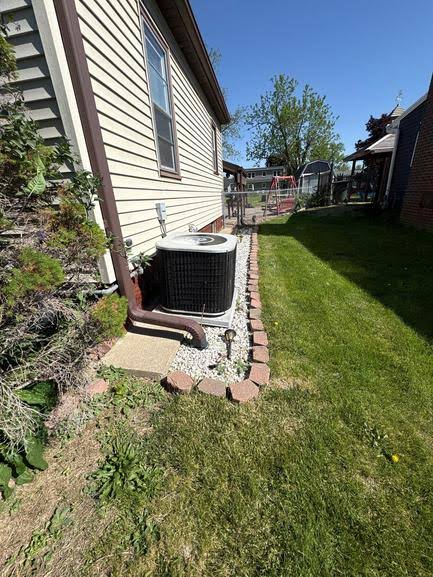
Related: AC unit slab leveling Cedar Rapids
Related: settled sidewalk vs replacement Cedar Rapids