commercial concrete leveling iowa for warehouses, HOAs, and cities
⏱️ 14 min read · Last updated: 2026
- Typical commercial concrete leveling cost is commonly about $4 to $8 per square foot for polyurethane foam work, with smaller jobs often priced by minimum service trip rather than pure square footage.
- Downtime per bay is often measured in hours, not days; many loading dock or warehouse slab lifting projects can reopen the same day if access and curing conditions are normal.
- Polyurethane foam used in commercial polyjacking can reach compressive strengths commonly around 50 to 100+ psi, depending on the product and system design.
- The ADA compliance threshold for a vertical change in level is 1/4 inch maximum for most walking surfaces; anything over that can become a trip hazard liability issue.
- In Iowa, municipal concrete raising and HOA sidewalk repair often cost less than full replacement when the slab is intact and the settlement is less than about 2 inches.
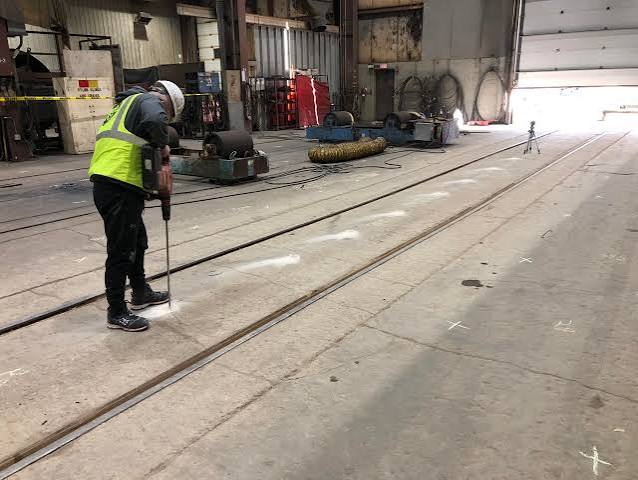
One half-inch lip at a dock door is enough to shake a pallet jack, and that is usually where commercial concrete leveling iowa pays for itself fast. I have seen small settlement jobs where replacement would have shut a bay down for a week, while foam lifting reopened it the same day.
The part most owners miss is not the lift itself. It is the cost of lost access, safety cleanup, and the second repair if the base keeps washing out. A $1,200 fix can be cheaper than a $9,000 slab tear-out, but only if the slab still has enough structure to hold the lift.
For commercial sites, the real question is not “Can this slab be raised?” It is “Can it be raised without breaking operations, ADA compliance, or the economics of the whole property?”
What actually determines the right answer here
The right fix depends on three things: slab condition, access, and what the downtime costs. If the slab is cracked but still carrying load, commercial concrete leveling iowa is often the smarter move. If the slab has heaved, shattered, or lost its base across a wide area, replacement usually wins.
The trade-off is simple. Polyurethane foam and other leveling methods are fast, but they cannot rescue a slab that is structurally done. That is why I look first at edge breaks, hollow sounds, and whether the slab moves under a loaded cart or forklift before I look at price.
For warehouse slab lifting, the best jobs are usually the ones where the floor is uneven, but the joints still align and the slab has not collapsed at the corners. For municipal concrete raising and HOA sidewalk repair, the best jobs are the ones where the trip point is the problem, not a deep failure under the concrete.
If you want a local reference point, the numbers on concrete leveling cedar rapids are a better starting point than generic national advice, because access and slab size change the economics fast.
Quotable line: If the slab is stable and the settlement is under a few inches, commercial concrete leveling iowa usually beats replacement on both cost and downtime.
Quick check: if the slab is intact, the base is accessible, and downtime hurts your revenue, leveling is likely the first path to price out.
Can commercial concrete be leveled without shutting down operations?
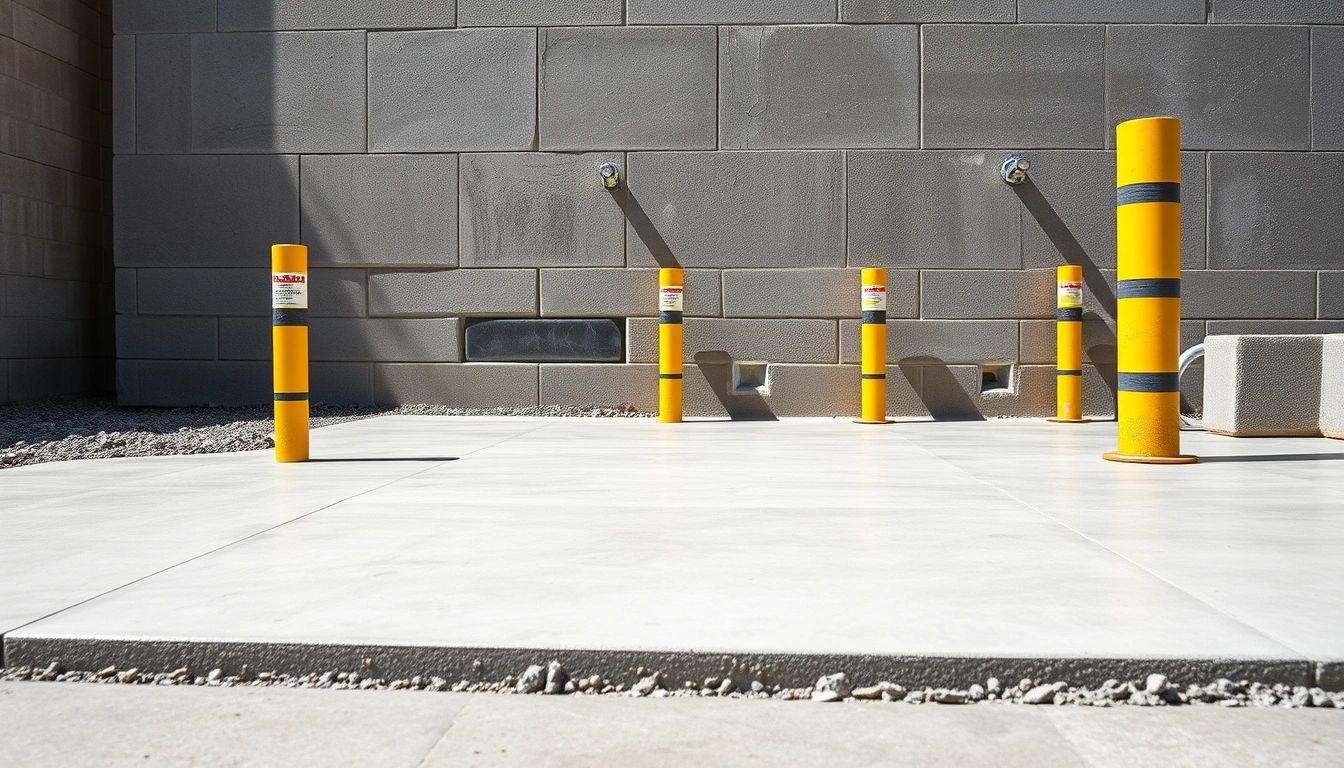
Yes, commercial concrete can often be leveled without shutting down operations, especially when the contractor uses minimal downtime injection methods. In many cases, a warehouse lane, dock apron, or sidewalk section can be closed in a small work zone while the rest of the site stays open.
The best fit is usually polyurethane foam because it cures quickly and does not require the long hold times that traditional mudjacking sometimes needs. If the site can tolerate a lane closure or a single bay closure, the work often happens in hours instead of days. That matters when one lost dock door can stall shipping, receiving, or staging.
- Mark the settlement zones and measure the vertical change at each joint or crack.
- Check whether forklifts, pallet jacks, carts, or foot traffic cross the area daily.
- Confirm the contractor can isolate the bay, lane, or sidewalk segment without blocking the entire facility.
- Ask what material will be used and how fast it can be returned to service.
- Plan the lift around the smallest workable closure window, not around the contractor’s full-day schedule.
- Recheck the area after loading resumes so any washout or voids show up early.
For commercial polyjacking, the practical advantage is not just speed. It is the ability to raise a slab, fill voids, and reopen a route before the business day is over. I have seen that difference matter most in distribution sites, where even a two-hour delay can ripple through the rest of the shift.
A same-day reopen is realistic for many commercial leveling jobs, but only when the slab is not crumbling and the access plan is tight.
That said, not every site should chase speed. If the concrete is under a loading dock with repeated point loads, the contractor should verify the base condition first. Otherwise, you fix the surface and keep the failure under it.
You can compare local timing notes against concrete leveling statistics if you want a broader Iowa-specific benchmark before you schedule work.
Quotable line: Many commercial foam-lift jobs reopen the same day because the cure time is measured in hours, not days.
Quick check: if you can close one bay, one sidewalk stretch, or one dock lane and still operate, you are a strong candidate for minimal downtime injection.
Who handles large-scale slab lifting for warehouses in Iowa?
Large-scale slab lifting for warehouses in Iowa is usually handled by commercial concrete leveling contractors that work with forklifts, dock aprons, storage aisles, and slab-on-grade floors. For warehouse slab lifting, you want a crew that understands production schedules, not just residential repair.
The wrong contractor treats the job like a driveway. The right contractor asks about rack loads, forklift routes, joint movement, and whether the floor has been patched before. That matters because a warehouse slab can look flat enough to walk on and still be off enough to damage equipment or create a lip at a rack line.
In a warehouse setting, the load rating matters as much as the lift. Polyurethane foam systems used in commercial settings commonly have compressive strengths around 50 to 100+ psi, but the actual design should match the slab thickness, subgrade condition, and traffic pattern. Higher strength is not automatically better if the underlying void remains unmanaged.
| Situation | Best Path | Why Other Options Fail |
|---|---|---|
| One dock door settled 3/4 inch | Commercial polyjacking with a short bay closure | Replacement costs more and shuts down the door longer |
| Long aisle with repeated forklift traffic | Survey the full run, then lift in sections | Spot fixes can leave a hard dip at the next joint |
| Multiple cracks plus hollow sounds across the bay | Structural review before lifting | Leveling a failed base can hide a deeper problem |
| Loading dock with a trip edge near the door | Prioritize edge restoration and joint alignment | Ignoring the lip keeps the trip hazard liability alive |
If your site is in Linn County, keep that location in the conversation when you ask for bids, because soil behavior, access, and weather timing all affect the plan. The price quote is only useful when it reflects the site, not just the square footage.
If you want a cost reference before calling anyone, the local breakdown on concrete leveling cost is a useful way to sanity-check a commercial quote.
Quotable line: Warehouse slab lifting works best when the slab is sound, the lift area is isolated, and the contractor understands commercial traffic, not just concrete.
Quick check: if your biggest risk is downtime, not demolition, you should be talking to a commercial-level crew rather than a general flatwork contractor.
How do HOAs manage sidewalk trip-hazard liability?
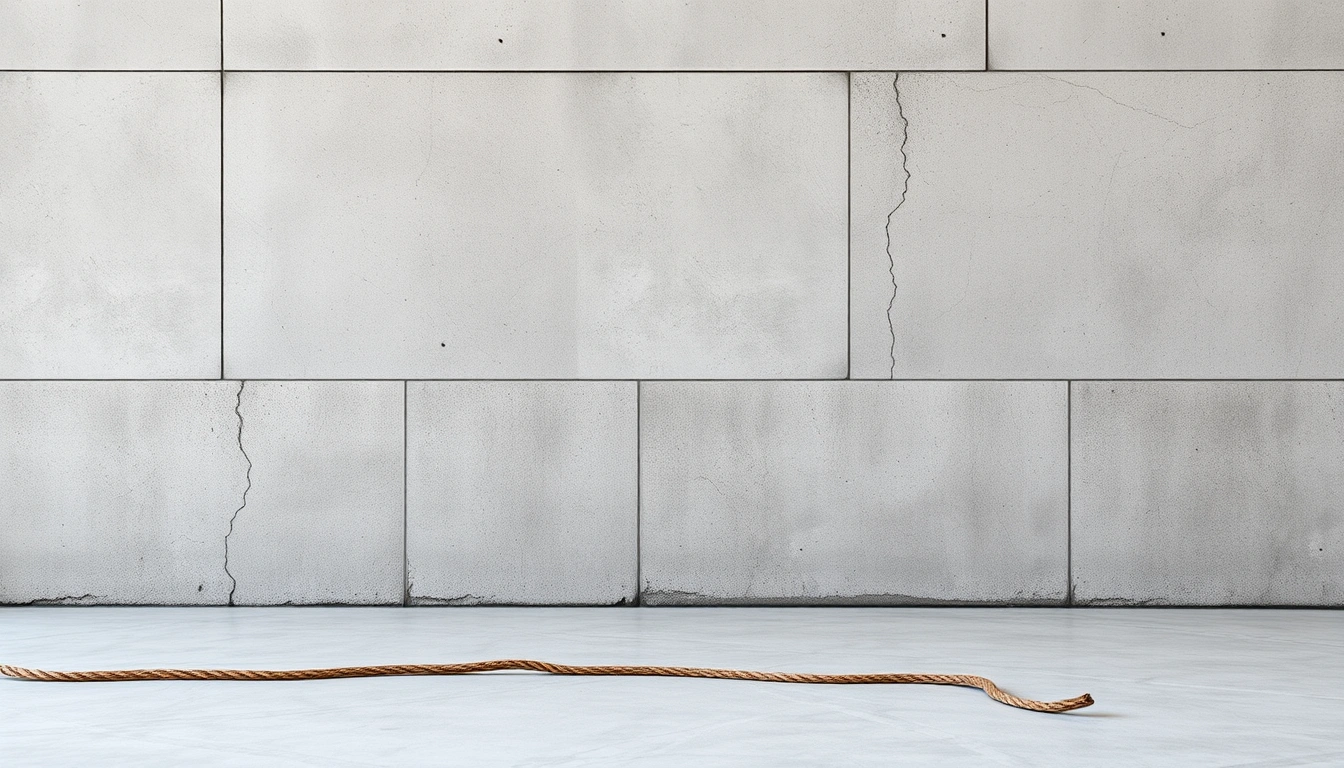
HOAs manage sidewalk trip-hazard liability by finding the height change, documenting it, and fixing the worst sections before complaints or claims build up. In most cases, HOA sidewalk repair is cheaper and cleaner than full replacement if the slabs are otherwise intact.
The important point is that HOA boards are not just buying a repair. They are reducing exposure. A sidewalk that rises or settles more than 1/4 inch can create a trip hazard liability issue, and a few bad panels near mailboxes, entrances, or clubhouse paths are usually the first to draw attention.
For HOAs, commercial concrete leveling iowa is often the right call when the pavement is mostly sound and the settlement is limited to one or two panels. The work is faster than replacement, less disruptive to residents, and usually easier to phase by section.
- Walk the property after rain and again in dry conditions.
- Mark any lip over 1/4 inch, especially where foot traffic bends or speeds up.
- Prioritize routes used by kids, older adults, and mail carriers.
- Group repairs into clusters so mobilization costs work in your favor.
- Request a repair plan that preserves access to homes during the project.
- Schedule a post-repair reinspection before the board closes the ticket.
The economic mistake I see is boards waiting for a cluster of complaints before acting. By then, the repair list is larger and the work is harder to phase. A few targeted lifts can keep the association from paying for replacement at every problem panel.
If you need visual examples before the board votes, the gallery on concrete leveling before and after cedar rapids helps show what a finished repair looks like when the slab was worth saving.
Quotable line: For an HOA, the cheapest fix is usually the one that removes the lip before it becomes a claim.
Quick check: if the sidewalk is mostly intact and the complaint is about a lip, leveling is usually the first repair to ask for.
The 3 conditions that change everything
The answer flips when the slab is broken, access is bad, or the economics favor replacement. If any one of those is true, commercial concrete leveling iowa may still help, but it should not be the automatic choice.
1. The slab is structurally gone
If the concrete has widespread crumbling, badly spalled edges, or large interconnected cracks, raising it can be false economy. Foam can lift a slab, but it cannot rebuild a failed matrix. In that case, partial replacement or full replacement often makes more sense.
2. The settlement is tied to moving water
If the base is washing out because of drainage, downspouts, or repeated saturation, the repair must include water control. Otherwise the slab settles again. That is where many “cheap fixes” become repeat repairs within a year or two.
3. The access window is not really short
If the site can already tolerate shutdown for another reason, replacement may close the gap in long-term durability. But if a single bay closure stops shipping, a fast lift usually wins even if the per-square-foot price is slightly higher.
Here is the practical decision rule I use: if the slab is sound enough to survive movement, level it; if the slab is too broken to trust, replace it. Anything in between should be decided by how much downtime the business can absorb.
The most expensive repair is often the one that saves today’s invoice but creates next season’s shutdown.
Quotable line: A slab that keeps moving because of water needs drainage work, not just a lift.
Quick check: if the concrete sounds hollow, the edges are breaking apart, or water keeps showing up under it, pause and inspect the base before you approve leveling.
When standard advice breaks down
Standard advice breaks down when the site is not a simple walkway or driveway. In commercial concrete leveling iowa, that happens more often than people expect because warehouses, HOAs, and municipal sites all have different risk profiles.
Here are the cases where normal advice fails, and what to do instead.
- Situation: A warehouse bay has repeated forklift traffic. What changes: The slab needs load-aware lifting and joint matching. What to do instead: Ask for a bay-by-bay plan and a post-lift traffic check before reopening.
- Situation: An HOA wants the lowest bid. What changes: The cheapest quote may skip trip hazard liability reduction in the worst spots. What to do instead: Rank the sidewalks by risk, not price alone.
- Situation: A municipality needs a public walkway restored quickly. What changes: Public access and complaint exposure matter more than cosmetic perfection. What to do instead: Use municipal concrete raising for the highest-risk panels first, then phase the rest.
- Situation: The slab has a void but looks unbroken. What changes: The empty space under it may be the real problem. What to do instead: Ask the contractor how they locate voids and what material fills them.
- Situation: The repair is near a loading dock or ramp edge. What changes: Edge movement can affect equipment more than the field of the slab. What to do instead: Prioritize edges, lips, and transitions before center areas.
The biggest mistake I have seen in 2026 is treating all slab settlement like one problem. It is not. A dock apron, a church sidewalk, and a municipal curb walk can all settle for different reasons and need different timelines.
If you want one outside reference point, the CDC and OSHA both treat falls and struck-by hazards as serious workplace risks; that is why even a small trip edge in a warehouse can become a big management issue. For ADA basics, the U.S. Access Board is the authority to use when you are checking thresholds and access rules.
Quotable line: The right fix changes when the site is a warehouse, HOA, or municipality, because the risk is downtime, liability, or public access.
Quick check: if your project has forklifts, residents, or pedestrians who cannot easily detour, the standard residential playbook is the wrong model.
The part that changes everything
The part that changes everything is not the foam. It is the business cost of staying closed. In commercial concrete leveling iowa, the best solution is usually the one that gets the area back in service with the least disruption, not the one with the prettiest invoice.
That is why commercial buyers should compare three things at once: repair cost per square foot, downtime hours per bay, and whether the fix protects ADA compliance. A quote that saves $600 but closes a dock for two extra days is often the worse deal.
| Situation | Best Path | Why Other Options Fail |
|---|---|---|
| Single settlement zone under active operations | Commercial polyjacking | Replacement creates unnecessary downtime |
| Widespread cracking with loss of structure | Replacement or partial replacement | Leveling only masks the failure |
| Multiple sidewalk lips across an HOA path | Phased HOA sidewalk repair | Waiting raises trip hazard liability |
| Public pedestrian area in a city right-of-way | Municipal concrete raising | Full replacement may take too long for public access needs |
A useful benchmark in 2026: if a contractor cannot explain how many hours a bay will be down, you are not talking to the right bidder. The method matters less than the reopen time once the slab is service-critical.
Quotable line: In commercial work, downtime hours per bay can matter more than the material cost per square foot.
Quick check: if one lost day costs more than the repair delta, lean toward the fastest viable leveling method.
Common Questions About commercial concrete leveling iowa
Can commercial concrete be leveled without shutting down operations?
Yes, many commercial concrete leveling jobs can happen with only a partial closure. If the contractor can isolate one bay, lane, or sidewalk segment, the rest of the site often stays open. Polyurethane foam is popular because cure time is usually hours, not days.
Who handles large-scale slab lifting for warehouses in Iowa?
Commercial concrete leveling contractors handle it, especially crews with warehouse slab lifting experience. Look for teams that ask about forklift routes, dock doors, rack loads, and joint movement. If they only talk about square footage, they may not understand production-floor risk.
How do HOAs manage sidewalk trip-hazard liability?
HOAs usually measure the lip, rank the worst panels, and repair the high-risk spots first. A vertical change over 1/4 inch can matter for ADA compliance, so sidewalk sections near mailboxes, entries, and common paths should be prioritized before complaints turn into claims.
Is polyurethane foam stronger than mudjacking slurry?
In most commercial applications, polyurethane foam offers better strength-to-weight performance and faster return to service than mudjacking slurry. The real comparison is not just strength; it is how well the material stabilizes the slab, fills voids, and lets the area reopen quickly.
How much does commercial concrete leveling usually cost per square foot?
Typical commercial concrete leveling cost is commonly around $4 to $8 per square foot for polyurethane foam work. Small jobs may carry minimum charges, while larger warehouse or municipal projects may price more efficiently once the crew is already on site.
When should a commercial slab be replaced instead of leveled?
Replace it when the slab is badly broken, the edges are failing, or the base has washed out across a large area. If the concrete is still structurally sound and the problem is localized settlement, leveling is usually the more practical first option.
- Commercial concrete leveling iowa is usually best when the slab is sound, the settlement is localized, and downtime matters.
- For many warehouses, HOAs, and municipalities, polyurethane foam is faster than replacement and can reopen areas the same day.
- A 1/4-inch vertical change is the key ADA compliance threshold to watch on walking surfaces.
- If water is still washing out the base, fix drainage first or the slab will move again.
The Bottom Line
Commercial concrete leveling iowa is worth serious consideration when the slab still has a job to do and you cannot afford a long shutdown. If the concrete is intact enough to lift, leveling usually beats replacement on speed and disruption, especially at a warehouse dock, an HOA sidewalk run, or a municipal walkway. If the slab is broken beyond trust, replace it instead of dressing up failure.
Pick one thing from this article and try it this week, not all of it. Measure the worst lip, write down the downtime cost for one bay, and ask for a leveling quote that includes reopen time in hours. That one comparison will tell you more than three generic bids.
See also: concrete leveling cedar rapids
See also: concrete leveling statistics iowa
See also: concrete leveling cost cedar rapids iowa
Related: garage slab lifting
Related: sunken garage floor leveling Cedar Rapids
Related: condenser pad settlement