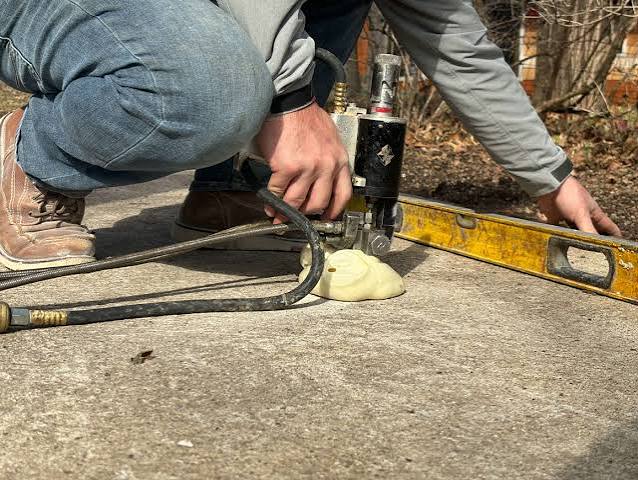
When to replace concrete instead of leveling Iowa: 7 signs repair is a waste
⏱️ 8 min read · Last updated: 2026
Replace concrete instead of leveling Iowa when the slab has wide structural cracks, deep spalling, crumbling edges, or lost thickness that weakens the concrete itself. If the problem is mostly settlement and the slab is still sound, leveling can still be the better fix. In Eastern Iowa, freeze-thaw cycles make weak slabs fail fast, so a quick visual check is not enough. Measure the damage, compare it to the repair thresholds, and choose the option that gives you the best long-term value.
- Crack width replacement threshold: cracks wider than 1/4 inch, especially if they are widening, usually push the decision toward slab replacement instead of leveling.
- Spalling depth threshold: deep spalling of about 1/2 inch or more, or spalling that exposes coarse aggregate across a large area, often makes leveling a poor use of money.
- Slab age consideration: concrete older than 20 to 30 years deserves a harder slab condition assessment because surface wear, rebar corrosion, and hidden base failure become more likely.
- Leveling is usually a same-day repair; slab replacement commonly takes 1 to 3 days for tear-out and pour, plus curing time before full use.
- Concrete lifting works best when the slab still has enough compressive strength to support the repair; once the slab is crumbling, the repair usually buys time, not value.
What actually tips the decision toward replacement
Replacement wins when the slab fails as concrete — not just as a surface. If two or more of these show up together — cracks wider than 1/4 inch, edges breaking in chunks, hollow-sounding sections, or surface loss reaching about 1/2 inch deep — start thinking about slab replacement, not leveling.
Homeowners notice height. Contractors look at condition. That difference can get expensive: I’ve seen people spend $1,200 on lifting, then pay another $4,000 for replacement a year later because the slab was already coming apart when they first called.
A slab can be sunken and still be repairable, but once the concrete has lost enough thickness to weaken its compressive strength, lifting just repositions a bad slab.
Quick check: if the slab is cracking through the thickness, shedding pieces, or breaking at the corners, replacement is the right path.

How do I know if my concrete is too far gone to level in Iowa?
Your concrete is too far gone to level when it fails simple durability tests: it crumbles under pressure, the crack width exceeds 1/4 inch, or the surface shows deep spalling with exposed aggregate. Grab a tape measure, screwdriver, and straightedge, and run this 10-to-15-minute check:
- Measure the widest crack width in inches — not just by eye.
- Tap the slab with a hammer and listen for hollow spots.
- Probe the damaged edge with a screwdriver to check for powdering or flaking.
- Measure the spalling depth at the worst point.
- Determine whether the slab moves because of settlement or because the concrete itself is breaking down.
- Look for repeated cracking near the same joint, which signals base or slab body failure.
If the slab is still solid but low, leveling works well. If it flexes, crumbles, or sheds chunks, the lift is only cosmetic — especially on driveways where vehicles and salt keep chewing up weak concrete after the repair.
Quick check: if a screwdriver makes the edge flake off and the crack is wider than 1/4 inch, stop treating this like a simple lift.
Leveling vs replacement: when does replacement win?
Leveling wins when the slab has sunk but still holds structural life. Replacement wins when the slab has failed as concrete.
| Situation | Best path | Why the other option fails |
|---|---|---|
| Slab settled 1 to 2 inches, surface intact | Leveling | Replacement removes usable concrete for no gain. |
| Crack width over 1/4 inch, edges still firm | Case-by-case; usually replacement if movement continues | Leveling may hold short term, but the crack keeps opening. |
| Deep spalling around joints or corners | Replacement | Foam or mudjacking cannot restore lost concrete thickness. |
| Crumbling slab, powdery surface, exposed aggregate | Replacement | The slab no longer has enough compressive strength to hold a lift. |
In 2026, the fastest mistake is treating all sinking concrete the same. A clean lift on a healthy slab can last years; a lift on a failing slab can fail within months. For a side-by-side cost breakdown, review concrete leveling vs replacement cost Iowa.
A slab with deep spalling and widening cracks is usually a replacement candidate, not a leveling candidate.
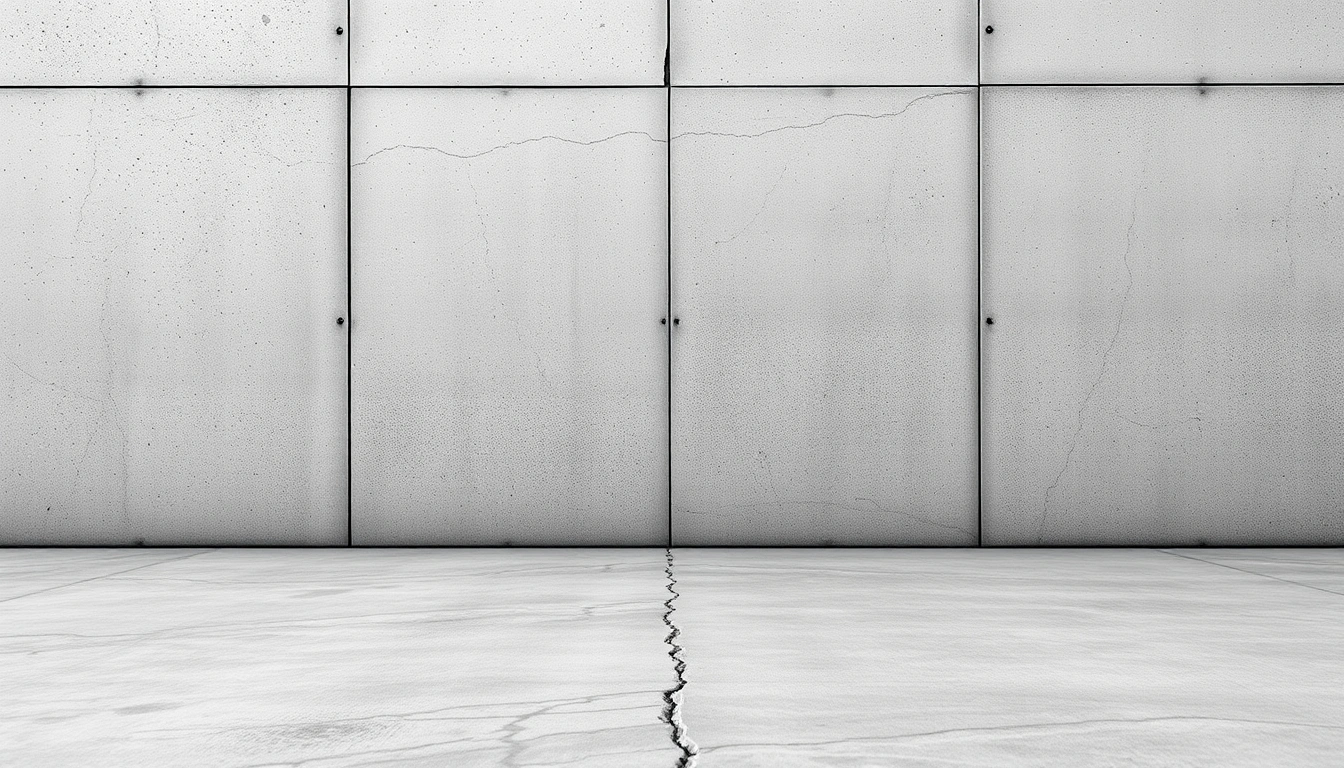
What slab damage means replacement instead of leveling?
Replacement becomes the right call when the damage goes beyond settlement. Wide cracks, deep spalling, corner breakup, or repeated patch failure are the flags.
Signs you should not ignore
- Crack width greater than 1/4 inch and still growing.
- Spalling deeper than about 1/2 inch.
- Edges that crumble when pressed with a screwdriver.
- Sections that sound hollow across a broad area.
- Visible rust staining, which hints at rebar corrosion in older slabs.
Concrete older than 20 to 30 years deserves extra suspicion in Eastern Iowa, where thaw cycles and road salt accelerate wear. Age alone does not force replacement, but it raises the odds of hidden damage below the surface.
When the standard advice breaks down
The standard advice breaks down when the slab looks bad but the failure is limited — or when the slab looks fixable but the base has already gone soft. These edge cases change the answer fast:
- Sunken slab with thick, solid concrete: Leveling can work because the slab still has compressive strength. Price leveling first and check for hidden washout.
- Hairline crack that is not moving: A crack alone does not force replacement. Seal it, monitor it, and recheck after one freeze-thaw season.
- One wide-cracked panel next to sound concrete: Partial slab replacement can beat full replacement. Replace only the damaged panel.
- Commercial or high-traffic driveway: Review commercial concrete leveling only if the slab body is still strong.
- Water pooling under the slab: Drainage failure ruins both repairs. Fix grading and downspouts before you choose.
If the underlying soil is washing out, neither option is final until you handle the water problem. That pattern is common on older walks and driveways in Eastern Iowa where downspouts dump beside the slab.
The slab condition assessment I would use first
Run this 7-step slab condition assessment before you call for any repair. It tells you whether the slab has repairable movement or replacement-level damage:
- Mark low spots with chalk and measure the height difference.
- Measure crack width at the widest point; photograph it with a ruler.
- Check spalling depth at the worst edge with a tape measure.
- Tap for hollow sections and note whether the sound is isolated or widespread.
- Test the surface with a screwdriver to see whether it powders or resists.
- Compare your findings against the replacement threshold: wide cracks, deep spalling, crumbling edges.
- Get one leveling estimate and one replacement estimate if the slab sits near the decision line.
If the slab still has solid edges and the damage is mainly vertical movement, leveling is usually the lower-cost, lower-disruption fix.
For local data, concrete leveling statistics show how often repair makes sense before jumping to replacement. And concrete leveling replacement cost comparison is the next review step.
Why the cheapest quote is not always the cheapest fix
The cheapest quote costs the most when the slab is already failing. A low-cost lift on bad concrete creates a second repair — and that second repair makes the project expensive.
Leveling is faster and less disruptive, often done in a few hours. Slab replacement costs more upfront and takes 1 to 3 days plus curing time, but it gives you a fresh slab with a known condition. Commercial concrete leveling Iowa and residential leveling are not the same conversation because load, wear, and downtime change the threshold.
I once judged an old sidewalk by height alone and ignored the hollow sound under half the panel. The lift looked fine for six months, then the edge broke out after the first hard winter. That taught me to never trust surface appearance alone when deciding when to replace concrete instead of leveling Iowa.
Common questions about when to replace concrete instead of leveling Iowa
What condition means concrete must be replaced not leveled?
Concrete needs replacement when the slab is crumbling, has structural cracks wider than 1/4 inch, or shows deep spalling of about 1/2 inch or more. These signs mean the concrete has lost too much compressive strength for leveling to hold up.
How do I assess if concrete can be leveled step by step?
Measure crack width, check spalling depth, tap for hollow spots, and probe the surface with a screwdriver. If the slab is still dense and the issue is mostly settlement, leveling usually works. If the slab sheds material or flexes, choose replacement.
When does replacement beat leveling?
Replacement wins when the slab has lost structural integrity — not just height. That means wide cracks, deep spalling, crumbling edges, repeated patch failure, or damage in a slab already past 20 to 30 years of service.
Why won’t a contractor level my crumbling slab?
Leveling cannot restore lost concrete strength. If the slab is powdery, flaking, or deeply spalled, lifting only repositions damaged material. Good contractors recommend slab replacement rather than selling a short-term fix that fails quickly.
How much more does replacement cost than leveling in Iowa?
Replacement costs several times more than leveling because it includes tear-out, hauling, formwork, fresh concrete, and curing time. The exact gap depends on slab size and access, so request a side-by-side estimate for an honest comparison.
Can deep spalling still be fixed without slab replacement?
Only if the spalling is shallow and isolated. Once the damage reaches about 1/2 inch deep or spreads across a large section, patching and leveling usually fail. At that point, replacement gives a cleaner, more durable result.
- Leveling works when the slab is low but still structurally sound.
- Cracks wider than 1/4 inch, deep spalling, and crumbling edges point toward replacement.
- Older slabs — especially 20 to 30 years old — deserve a stricter slab condition assessment.
- Saving money on a failing slab often means paying twice.
The bottom line
When to replace concrete instead of leveling Iowa comes down to one rule: if the slab has lost material — not just height — replacement is usually the smarter call. If the slab is still dense, edges are intact, and the problem is settlement alone, leveling is worth considering. This week, measure your widest crack width and your deepest spalling spot before you call anyone.
That one measurement tells you more than a vague quote. For the economic side, start with Repair vs Replace: The Economics of Concrete Leveling in Eastern Iowa.
See also: concrete leveling vs replacement cost Iowa
See also: commercial concrete leveling iowa
See also: concrete leveling cedar rapids
See also: concrete leveling vs replacement cost Iowa
See also: commercial concrete leveling iowa
See also: concrete leveling cedar rapids